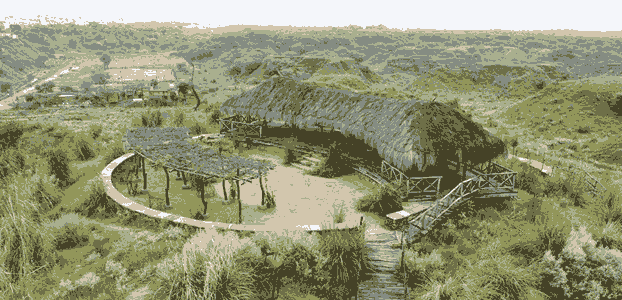
At the foot of the Nahargarh Hill in Vidyadhar Nagar, Jaipur, there is a place that genuinely does not fit any standard tourist category. Kishan Bagh is not a fort. It is not a garden in the conventional flowered-lawn sense. It is not a wildlife sanctuary. It is a 30-acre ecological restoration of a desert sand dune landscape — India’s first urban desert ecosystem park — where barren wasteland has been transformed into a living fragment of the Thar Desert within Jaipur’s city boundary.
The transformation was led by Pradip Krishen, the ecologist and author of Trees of Delhi, who previously created the Rao Jodha Desert Rock Park in Jodhpur (now one of Rajasthan’s most celebrated ecological projects). In January 2016, the Jaipur Development Authority invited Krishen to do for Jaipur what he had done for Jodhpur — restore a degraded urban landscape to its natural desert state. Kishan Bagh opened to the public in 2019 and has since become Jaipur’s most quietly remarkable attraction.
Kishan Bagh Ticket Price 2026 — Entry Fee
| Category | Entry Fee |
| Adults | ₹50 per person |
| Students (with valid ID) | ₹25 per person |
| Children (very young) | Free or nominal — verify at entry |
The ₹50 adult entry fee and ₹25 student fee are confirmed by multiple sources including recent 2026 visitor accounts and tourism guide sources. Tickets are purchased only at the entrance gate — no online booking is available.
Note on free entry claims: Some older sources list Kishan Bagh as free. As of 2025–2026, a nominal ₹50 entry fee for adults is in place. Verify at the gate on arrival.
Kishan Bagh — Quick Overview
| Detail | Information |
| Full Name | Kishan Bagh Sand Dune Park |
| Managed By | Jaipur Development Authority (JDA) |
| Address | 10A, Sector 8 Main Road, Naya Khera, Vidyadhar Nagar, Jaipur, Rajasthan – 302039 |
| Concept / Design | Pradip Krishen (ecological restoration) |
| Opened to Public | 2019 |
| Area | ~30 acres |
| Entry Fee | ₹50 (adults) / ₹25 (students) |
| Closed Day | Tuesday (weekly holiday) |
| Summer Timings | 6:00 AM – 6:30 PM |
| Winter Timings | 8:00/8:30 AM – 5:30 PM |
| Distance from Hawa Mahal | ~15–20 km |
| Distance from Jaipur Railway Station | ~8 km |
| Nearby Landmark | Nahargarh Fort / Nahargarh Biological Park |
| Photography | Permitted throughout |
| Online Booking | Not available (gate purchase only) |
Kishan Bagh Timings 2026
| Season | Opening | Closing |
| Summer (April–October) | 6:00 AM – 6:30 AM | 6:00 PM – 6:30 PM |
| Winter (November–March) | 8:00 AM – 8:30 AM | 5:30 PM |
| Closed | Every Tuesday |
Best visiting windows: Sunrise (6:00–8:00 AM) — cool, soft light, minimal visitors. Sunset (4:00–6:00 PM) — golden dune light, dramatic photography, most atmospheric.
History — From Royal Garden to Desert Restoration
The land on which Kishan Bagh stands has a layered history. The garden was originally established around the palace of Prince Jagat Singh, son of King Mirza Man Singh of Amer, in the Mughal period. The prince named the palace Mariam Mahal after his wife, and the garden developed around it became known as Kishan Bagh.
Over subsequent centuries, the palace and garden fell into neglect. By the time the JDA began planning its restoration in 2016, the land had reverted to a barren, dusty wasteland — described by some as resembling the ravines of Chambal. The site is at the northeast boundary of Jaipur city, at the base of the Nahargarh Hills.
Pradip Krishen’s intervention was conceptually radical: rather than building a conventional park with irrigation, imported plants, and formal landscaping, he proposed restoring the land to its natural pre-disturbance state — a Roee landscape, the term for the natural desert scrubland ecosystem of western Rajasthan. The Roee landscape is what the Thar Desert actually looks like at its ecological base — not the dramatic dunes of Jaisalmer tourism photography, but scrubland with indigenous grasses, thorny shrubs, and the occasional tree.
The result, six years in development, is a park where plants are almost entirely self-seeded or hand-planted using only species native to the local Aravalli-Thar ecology, where no external water source is used (the park is rain-fed only), and where the sand dunes are genuine wind-formed formations rather than landscaping.
What to See and Do at Kishan Bagh
The Sand Dunes
Kishan Bagh’s sand dunes are its defining feature and the reason photographers and nature seekers specifically make the trip. These are not constructed tourist dunes — they are genuine wind-formed formations that have developed naturally on the site’s sandy substrate. The dunes are substantially smaller than those at Jaisalmer but their context — within a city, against the backdrop of the Nahargarh Hills — makes them unique.
At sunrise and sunset, the directional light creates strong shadow lines across the dune faces, producing some of the most photogenic landscapes available in Jaipur without travelling far. The dunes are accessible on foot via the park’s gravel walking trails.
Indigenous Desert Flora
One of Kishan Bagh’s primary educational purposes is demonstrating the biodiversity of desert vegetation. Visitors encounter species typically dismissed as “wasteland scrub” in other urban contexts, presented here with identification panels:
Khejri (Prosopis cineraria) — The state tree of Rajasthan; a nitrogen-fixing tree of profound importance to desert communities. Sacred in the Bishnoi tradition.
Rohida (Tecomella undulata) — Rajasthan’s state flower; produces brilliant orange flowers seasonally; extremely drought-resistant.
Munj Grass (Saccharum bengalense) — Tall native grass used traditionally for rope and basket weaving; grows along the dune margins.
Seenio / Senia — A seasonal desert shrub that turns dramatically green after monsoon rains, demonstrating the desert’s latent vitality.
Phog (Calligonum polygonoides) — A distinctive leafless desert shrub with fine green stems; one of the most characteristic plants of the Thar.
Cactus species — Multiple native and naturalised cactus species present throughout.
The flora changes dramatically by season — winter brings dry, muted colours while post-monsoon (September–October) sees an explosion of green as dormant plants respond to rain.
Geological Displays
Kishan Bagh includes a geological exhibit area displaying rock samples from the local Aravalli formation, including:
Stromatolite fossils — Ancient layered microbial structures preserved in local limestone; among the oldest evidence of life in this region, dating to hundreds of millions of years ago. These are genuine fossils displayed in situ as outdoor exhibits — a remarkable educational feature that few visitors expect.
Local sandstones — Samples of the pink and yellow sandstones quarried extensively across Jaipur’s architecture, displayed with geological context.
Walking Trails and Boardwalk
Kishan Bagh maintains a system of gravel and compacted-earth walking trails through the dune and scrubland sections, designed to allow exploration without damaging the vegetation. The walking trail system includes:
- A perimeter trail around the full 30-acre park
- A dune traverse trail that crosses the sand formations
- A viewpoint deck (Viewing Deck) providing elevated views across the dune landscape toward the Nahargarh Hills
The full trail circuit takes approximately 1.5 to 2.5 hours at a comfortable pace. The terrain is uneven sand and gravel — appropriate footwear (closed shoes or sandals with grip) is essential.
Birdwatching
Kishan Bagh has become a recognised birdwatching site. The native scrubland vegetation supports a significant resident bird population, and the park’s relative quiet makes observation easier than in more visited city parks. Regular sightings include:
- Various warbler species (particularly during winter migration)
- Prinias and babblers
- Sunbirds attracted to desert-flowering plants
- Larks (multiple species)
- Common kingfisher at the small water body (if present seasonally)
- Occasional raptors including kestrels
Birders visiting between October and February report the most productive sessions.
Naturalist Guided Walks
Kishan Bagh periodically offers guided walks led by naturalists who explain the ecological restoration process, identify plants, and discuss the wider context of the Aravalli-Thar ecosystem. Guided walk schedules and availability change — enquire at the entrance or check JDA announcements before visiting.
Photography at Kishan Bagh
Kishan Bagh is one of Jaipur’s best photography destinations for visitors who want images that do not look like every other Jaipur tourist photograph. The combination of dunes, indigenous vegetation, and the Nahargarh Hills background creates a landscape that reads as dramatic desert rather than city park.
Best conditions:
- Sunrise (6:00–8:00 AM): Golden soft light from the east; empty park; dune shadows most pronounced
- Sunset (4:30–6:00 PM): Warm directional light from the west illuminating the dune faces; atmospheric haze on the Nahargarh Hills
- Post-monsoon (September–October): Maximum green vegetation contrast against sand; clear air after monsoon dust-washing
DSLR and professional camera: Permitted throughout the park.
Drone photography: Requires prior permission from the Jaipur Development Authority. Not typically granted for casual visitors.
How to Reach Kishan Bagh Jaipur
Address: 10A, Sector 8 Main Road, Naya Khera, Vidyadhar Nagar, Jaipur – 302039. Google Maps: Search “Kishan Bagh Jaipur” for accurate navigation.
By Car/Taxi (Recommended): The most practical approach from most Jaipur locations. From Hawa Mahal: ~15–20 km, 30–40 minutes. From Jaipur Railway Station: ~8 km, 20–30 minutes. Ola and Uber available — set destination as “Kishan Bagh Jaipur Vidyadhar Nagar.”
By Auto-Rickshaw: Available from various city points. Negotiate the fare — expect ₹300–₹500 from the city centre.
By Bus: JCTSL public buses run toward Nahargarh Biological Park. From the biological park, Kishan Bagh is accessible on foot or by short auto ride.
Parking: Available near the park entrance.
Combined with Nahargarh Fort: Kishan Bagh is located below Nahargarh Hill. A combined visit to Kishan Bagh (morning) and Nahargarh Fort (afternoon) makes an efficient pairing — the fort is approximately 2 km up the hill.
Visitor Guidelines
- Closed on Tuesdays — do not plan your visit for a Tuesday
- Carry water — the park has limited shade and no water points inside
- Appropriate footwear mandatory — walking on sand and gravel requires closed shoes or grippy sandals
- No plastic bottles or plastic bags inside the park (ecological conservation area)
- No loud music
- No outside food — the park’s ecological character means litter is a genuine conservation concern
- Photography permitted; no touching or removing plant material
- Children should be supervised — the dune areas involve uneven terrain
Best Time to Visit
October to February: The ideal season. Jaipur’s winter is mild (10°C to 25°C), the vegetation from the monsoon is still relatively green through October–November, and the dune light in winter is warm and directional throughout the day. Birdwatching is most productive in this period.
Post-monsoon (September–October): The most ecologically vibrant period. Plants that have responded to monsoon rain are at peak green — the Seenio and other drought-deciduous shrubs are dramatically transformed. A genuinely unusual visual experience.
Summer (April to June): Hot (often exceeding 42°C at Jaipur) — early morning (before 8:00 AM) visits are the only practical option. Photography at sunrise is spectacular but the heat makes extended walking very demanding.
Monsoon (July–August): Avoid — sand is unstable when wet, trails can be slippery, and the park’s natural character is most disrupted by rain.
Why Kishan Bagh Matters
Among Jaipur’s tourist attractions, Kishan Bagh is genuinely different in ambition and character. It is the only attraction in the city where the goal is ecological authenticity rather than heritage or entertainment. The ₹50 entry fee — kept deliberately low by the JDA — reflects the park’s mission as a public ecological resource rather than a revenue-generating tourist facility.
For visitors with an interest in conservation, desert ecology, indigenous landscapes, or simply photographs of Jaipur that do not feature the same fort backgrounds as everyone else’s portfolio, Kishan Bagh is one of the most rewarding 2 to 3 hours available in the city.
Frequently Asked Questions
Q1. What is the Kishan Bagh Jaipur ticket price in 2026?
₹50 per adult. ₹25 for students with valid ID. Tickets purchased only at the entrance gate — no online booking available.
Q2. What are Kishan Bagh Jaipur timings?
Summer (April–October): approximately 6:00 AM to 6:30 PM. Winter (November–March): approximately 8:00–8:30 AM to 5:30 PM. Closed every Tuesday.
Q3. What is unique about Kishan Bagh?
It is India’s first urban desert ecosystem park — a 30-acre ecological restoration of Thar Desert sand dune landscape within Jaipur city, featuring authentic wind-formed dunes, only indigenous desert flora, geological fossil displays (Stromatolites), and no external irrigation.
Q4. How far is Kishan Bagh from Jaipur city centre?
Approximately 15–20 km from Hawa Mahal / city centre; about 8 km from Jaipur Railway Station. Located in Vidyadhar Nagar near Nahargarh Biological Park.
Q5. Is Kishan Bagh good for photography?
Excellent — it is one of Jaipur’s best photography locations for desert landscape images. Best light at sunrise and sunset; post-monsoon (September–October) for maximum green vegetation contrast.