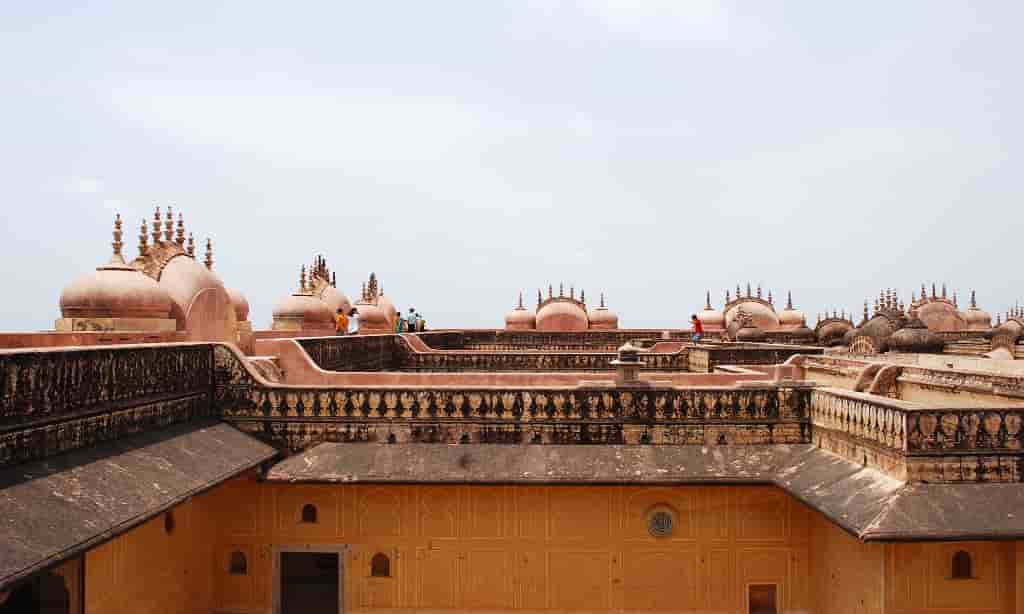
On the jagged Aravalli ridge that forms Jaipur’s northern and western skyline, Nahargarh Fort watches over the Pink City from a height of roughly 700 feet. Built in 1734 by Maharaja Sawai Jai Singh II — the same visionary ruler who founded Jaipur itself — Nahargarh was conceived as a retreat and strongpoint, never fell to a single attack in its history, and today serves as the most atmospheric of Jaipur’s three hill forts for visitors interested in panoramic views, Rajasthani architecture, and a genuine sense of elevation above a living city.
Where Amber Fort draws the most footfall and Jaigarh Fort houses the famous Jaivana cannon, Nahargarh is Jaipur’s sunset fort — the place locals and tourists alike seek specifically for the hour when the Pink City turns gold below.
Nahargarh Fort Ticket Price 2026 — Official Entry Fee
| Category | Entry Fee |
| Indian Adults (above 7 years) | ₹50 per person |
| Indian Students (with valid ID) | ₹5 – ₹20 per person |
| Foreign Tourists | ₹200 per person |
| Children below 7 years | Generally free |
Note on pricing discrepancies: Some sources cite ₹100 for Indian adults and ₹600 for foreign tourists — these may reflect a revised tariff implemented more recently or include additional museum/Madhavendra Bhawan charges. The ₹50 Indian / ₹200 foreign rate is the most consistently cited across current sources. Verify at the fort ticket counter on arrival, as Rajasthan Department of Archaeology and Museums fee structures are updated periodically.
Composite Tourist Ticket: Jaipur offers a multi-site composite ticket covering Amber Fort, Hawa Mahal, Jantar Mantar, Nahargarh Fort, Albert Hall Museum, Isarlat, Sisodia Rani Garden, and Vidhyadhar Garden. This provides good value for visitors covering multiple monuments in one or two days.
Additional charges may apply for specific in-fort attractions: Jaipur Wax Museum (separate entry), Madhavendra Bhawan interior access, and commercial photography/tripods require prior permission.
Nahargarh Fort — Quick Overview
| Detail | Information |
| Full Name | Nahargarh Fort (Tiger Abode Fort) |
| Original Name | Sudarshangarh Fort |
| Address | Krishna Nagar, Jaipur, Rajasthan – 302002 |
| Built | 1734 by Maharaja Sawai Jai Singh II |
| Expanded | 1868 (renovation); 1883–1892 (Madhavendra Bhawan construction) |
| Style | Indo-European |
| Location | Aravalli Hills, ~700 ft above Jaipur city |
| Open Days | All 7 days |
| Timings | 10:00 AM – 6:00 PM (fort complex); some sources cite 10:00 AM – 10:00 PM for grounds |
| Indian Adults | ₹50 |
| Indian Students | ₹5–₹20 |
| Foreign Tourists | ₹200 |
| Distance from Jaipur City Centre | ~10 km |
| Distance from Hawa Mahal | ~7 km |
| Distance from Amber Fort | ~6 km |
| Nearby | Jaigarh Fort (2 km by wall); Jal Mahal (10 km) |
Nahargarh Fort Timings 2026
| Area | Timings |
| Fort Complex (main entry) | 10:00 AM – 6:00 PM |
| Fort Grounds / Ramparts | 10:00 AM – 6:00 PM (some sources: until 10:00 PM) |
| Padao Restaurant (in-fort) | Open into the evening |
| Wax Museum | 10:00 AM – 6:00 PM |
Sunset visits: Nahargarh’s sunset view (approximately 5:30–6:30 PM in winter, 6:30–7:30 PM in summer) is the primary draw for evening visitors. Check local sunset time before visiting and arrive at least 30 minutes before.
Night visit caution: Despite sources citing 10:00 PM access for the grounds, the fort is surrounded by dense deciduous forest. Visiting after sunset on foot is not advisable without a guide; vehicular access to the fort entrance is the safe approach after dark.
History of Nahargarh Fort
Foundation and Purpose
Maharaja Sawai Jai Singh II built Nahargarh in 1734, simultaneously with his founding of Jaipur (planned city, established 1727). The fort was part of a deliberate three-point hilltop defence system with Amber Fort (to the northeast) and Jaigarh Fort (adjacent on the same ridge) — the extended wall connecting Nahargarh to Jaigarh is still partially visible.
Uniquely in Rajputana military history, Nahargarh has never been successfully attacked or besieged. The field guns within the fort complex were never fired in combat — they were used to signal time to the city below. The fort served as a royal retreat, a refuge for the women of the court during military tensions, and a diplomatic venue: in the 18th century, treaties with the Maratha forces who had warred with Jaipur were signed here.
During the Sepoy Mutiny of 1857, Nahargarh provided shelter to European residents of Jaipur including the family of the British Resident — a historical footnote that illustrates the fort’s persistent role as a place of safety.
The Name — Tiger Abode or Royal Ghost?
Two explanations circulate for the name Nahargarh:
The literal translation — Nahar means tiger, garh means fort — suggests the name reflects the presence of tigers in the Aravalli forests around the construction site in the 18th century. Tigers were genuinely present in the Aravallis through this period; the Jaipur royal family hunted them here.
The second explanation is the legend of Nahar Singh Bhomia — a Rathore prince whose spirit was believed to haunt the construction site, causing walls to collapse overnight and obstruction in the building process. Sawai Jai Singh, the story goes, commissioned a temple within the fort dedicated to Nahar Singh Bhomia to appease the spirit and renamed the fort accordingly. This explanation is the more popular one in local oral tradition and is the version told by most fort guides.
A temple dedicated to Nahar Singh Bhomia exists within the fort complex to this day — one of several active temples within the Nahargarh precincts.
Madhavendra Bhawan (1883–1892)
The most architecturally significant structure within the fort was commissioned by Maharaja Sawai Ram Singh and built between 1883 and 1892. Madhavendra Bhawan was designed as a residential palace for the Maharaja and his queens — a multi-suite residential complex built into the fort’s hillside.
The palace consists of a central king’s suite surrounded by nine identical suites for the nine queens, arranged symmetrically so that the Maharaja could visit each queen’s quarters in private through a connecting corridor system that gave him access to each suite without passing through the others. Each queen’s suite is self-contained with its own sitting room, bedroom, bathroom, and private balcony.
The interiors feature:
- Victorian-influenced frescoes on walls and ceilings, painted by local artists who incorporated European imagery (floral, architectural, and portrait motifs) alongside traditional Rajput patterns
- Minakari enamelwork in characteristic Jaipur style on decorative panels
- Internal balconies overlooking the valley and the city below
- Natural ventilation shafts designed into the thick walls to keep the interior cool without mechanical systems
The painted corridors of Madhavendra Bhawan are one of the most rewarding interior experiences at any Jaipur fort — less visited than Amber Fort’s Sheesh Mahal but arguably more intimate.
What to See at Nahargarh Fort
Panoramic Views — The Primary Draw
From the fort’s ramparts and the Madhavendra Bhawan upper terraces, the view of Jaipur is the widest available from any publicly accessible point in the city. The entire urban grid laid out by Sawai Jai Singh II in 1727 — the Pink City’s characteristic terracotta-coloured buildings, the Hawa Mahal visible as a tiny ornate structure, the Jal Mahal palace visible in Man Sagar Lake, Amer village and fort in the northeast — spreads across the panoramic frame.
The view is dramatically different at different times:
- Morning (10:00 AM): Clear light, city activity visible, good for photography
- Afternoon (1:00–3:00 PM): Harsh flat light; less ideal for photography but good for interior exploration
- Sunset (golden hour): The defining Nahargarh experience — the city turns warm amber, long shadows appear across the grid, and the Aravalli horizon glows
Madhavendra Bhawan (Palace of Nine Queens)
The most significant heritage structure inside the fort (described in detail above). The nine symmetrical suites and the connecting corridor system are a rare surviving example of zenana (women’s quarters) architecture that was designed for both royal intimacy and queenly privacy simultaneously.
Hours for interior: Typically included in the fort entry; verify at the gate as some interior sections may have separate ticketing or restricted access.
Tadigate — The Fort Entrance
The main entrance gateway of Nahargarh. As you pass through, a temple on the left side of the entrance passage is dedicated to the deity of the Jaipur monarchs. The gate itself is a classic Rajput defensive entrance — chicane-format (angled entry preventing direct assault), with niches for guards, and the remnants of metal-studded doors.
Jaipur Wax Museum
Located near the fort entrance, this museum features over 35 wax and silicone figures of notable personalities — Bollywood actors, sportspersons, freedom fighters, social reformers, and the Maharajas and Maharanis of Jaipur. The space was formerly the soldiers’ rest house (Vishram Grah) and the house of artillery (Shastragar). The Jaipur Wax Museum charges a separate entry fee; it is worth visiting if the specific figures are of interest, though the collection is smaller than the Delhi, Jaipur, and Mumbai versions of established wax museums.
Sheesh Mahal (Palace of Mirrors)
A relatively recent addition adjoining Nahargarh Fort — constructed with an estimated 25 million pieces of glass to create a mirror-palace effect. The photographic effect inside the Sheesh Mahal is impressive; the intricate glasswork covering walls, ceiling, and floor creates a kaleidoscopic interior environment. Separate entry charges may apply.
Sunset Point and Telescope Viewing
A designated viewing area near the fort’s high ramparts with telescopes available for rent to observe Jaipur’s cityscape in detail. The sunset point attracts the largest crowds of any area within the fort complex during the evening.
Once Upon a Time / Padao Restaurant
A fine-dining restaurant within the fort premises offering Royal Rajasthani cuisine with a panoramic city view as backdrop. One of Jaipur’s more unusual dining settings — inside a working historic fort with the full city below. A shorter-menu casual version (Padao Restaurant) is also available for quick meals. Advance reservation recommended for the fine-dining option.
Nahargarh Fort and Jaipur’s Three-Fort Circuit
Most Jaipur visitors combine Nahargarh with the other two Aravalli hill forts:
| Fort | Distance from Nahargarh | Best For |
| Amber Fort | ~6 km | Scale, architecture, Sheesh Mahal, elephant rides |
| Jaigarh Fort | ~2 km (connected by wall) | Jaivana cannon, military history, Aravalli views |
| Nahargarh Fort | — | Panoramic city views, sunset, Madhavendra Bhawan |
Recommended itinerary: Amber Fort in the morning (opens 8:00 AM), Jaigarh Fort at noon (on the same hill), and Nahargarh Fort in the afternoon for the sunset (arrive by 4:30–5:00 PM).
How to Reach Nahargarh Fort
By Road: The fort is accessible by road via two routes:
- Via Jaipur city (recommended for cars): From the City Palace / Hawa Mahal area, head northwest on Nahargarh Road through the Badi Chaupar direction, then follow signs uphill toward the fort. The road climbs steeply through the forest for the final 3–4 km.
- Via Amber Fort road: From the Amber Fort junction, take the road along the Aravalli ridge — this route provides continuous hilltop views and joins the Nahargarh access road from the north.
Cab / Taxi: Most practical for first-time visitors. Set destination “Nahargarh Fort Jaipur” on Google Maps. Ola and Uber available from any Jaipur location.
Auto-rickshaw: Available from Jaipur city centre to the fort base; the steep road up may require a taxi or car for the final section.
Distance from Jaipur Railway Station: ~10 km / approximately 25–35 minutes by road.
Parking: Available at the fort.
Best Time to Visit
October to February: Jaipur’s winter is the ideal season — temperatures between 8°C and 25°C make the outdoor fort walk comfortable. Clear winter air improves the panoramic city view dramatically. Winter sunsets at 5:30–6:00 PM come at a visiting-friendly time.
Late afternoon (3:30–5:30 PM): Arrive 2 hours before sunset for enough time to explore Madhavendra Bhawan, walk the ramparts, and settle at the sunset point before the light changes.
Summer (April–June): The fort is exposed and the hilltop heat (45°C+) makes daytime visits gruelling. Early morning (10:00 AM–12:00 PM) is the only viable window.
Visitor Tips
- Carry water — no water sources inside the fort and the walk from parking to the ramparts is 10–15 minutes
- Comfortable closed footwear essential — uneven stone surfaces throughout
- Photography is unrestricted for personal cameras; commercial photography requires prior permission
- Evening visits after sunset should be vehicular (not on foot through the forest)
- The Padao / Once Upon a Time restaurants are popular — arrive early or book in advance
Frequently Asked Questions
Q1. What is the Nahargarh Fort Jaipur ticket price in 2026?
₹50 for Indian adults; ₹5–₹20 for Indian students (with valid ID); ₹200 for foreign tourists. Children below 7 generally free. Verify at the ticket counter as Rajasthan Department rates are revised periodically.
Q2. What are Nahargarh Fort timings?
10:00 AM to 6:00 PM daily. Some sources cite the fort grounds remaining accessible until 10:00 PM — verify on arrival. The sunset viewing window (4:30–6:30 PM depending on season) is the most popular.
Q3. What is Madhavendra Bhawan?
A royal residential palace built within Nahargarh Fort between 1883 and 1892 by Maharaja Sawai Ram Singh, housing a central suite for the king surrounded by nine identical suites for his nine queens. The Victorian-influenced frescoes and the privacy-designed corridor system make it the fort’s most architecturally interesting structure.
Q4. Can I combine Nahargarh Fort with Amber and Jaigarh in one day?
Yes. The standard Jaipur circuit visits Amber Fort in the morning, Jaigarh Fort at midday, and Nahargarh Fort in the afternoon for the sunset. All three are within 6–10 km of each other on the same Aravalli ridge.
Q5. Is there a restaurant at Nahargarh Fort?
Yes. Padao Restaurant and the Once Upon a Time fine-dining restaurant are both located within the fort complex, offering panoramic city views alongside food. Once Upon a Time serves royal Rajasthani cuisine and is particularly atmospheric at sunset.